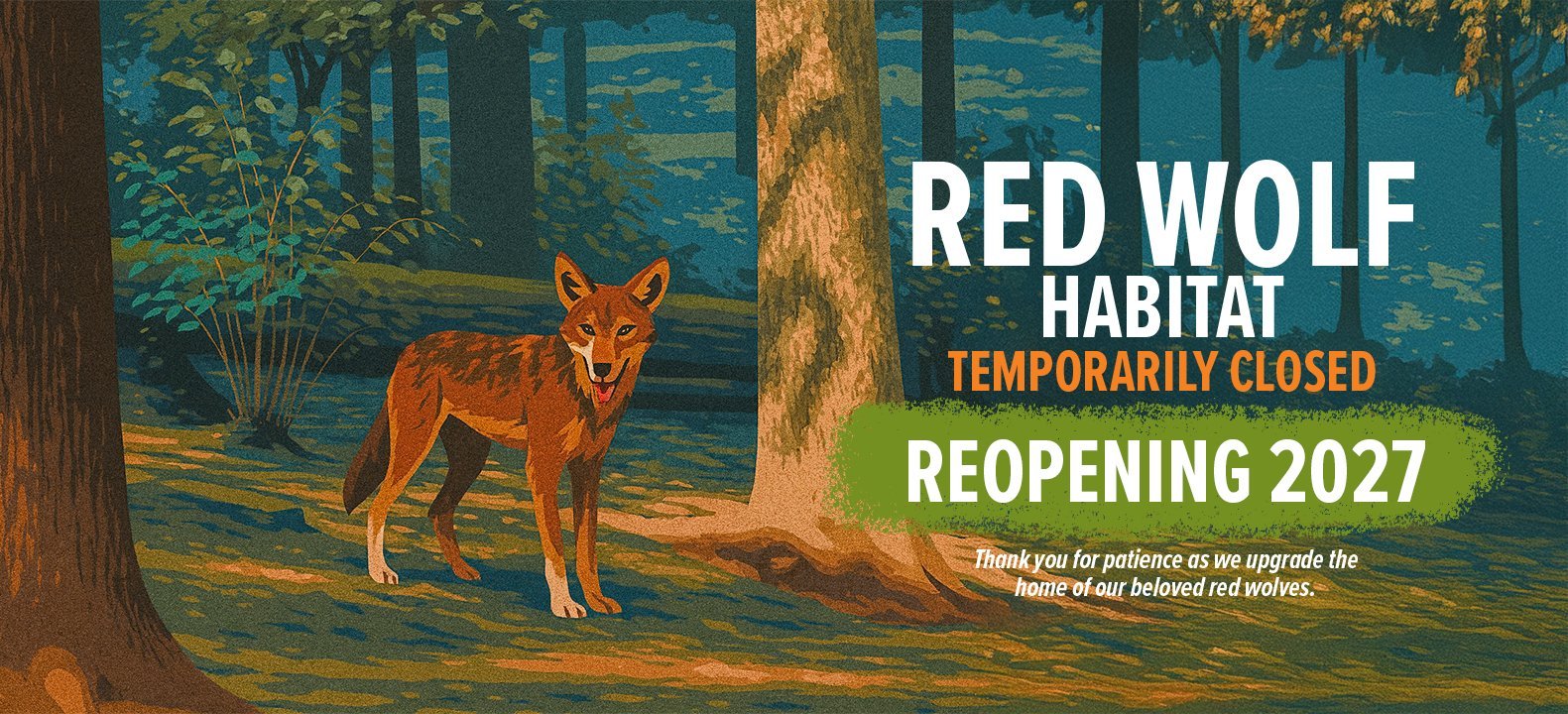


Red Wolf | Returning 2027
Scientific Name
Canis rufus
Conservation Status: Critically Endangered
Extremely high risk of extinction in the wild.
Diet
Raccoon, rabbit, white-tailed deer, nutria, and other rodents.
Habitat in the Wild
Forests, Wetlands, Coastal prairies, Mountains
Quick Fact
The red wolf is one of two species of wolves in North America, along with the gray wolf (Canis lupus).
Critically Endangered
Red wolves are off exhibit until 2027. Please check back.
The red wolf is one of two species of wolves in North America, along with the gray wolf (Canis lupus), and is the only wolf with a home range entirely within the US borders. As their name suggests, red wolves are known for the characteristic reddish color of their fur most apparent behind the ears and along the neck and legs but are mostly brown and buff colored with some black along their backs. The average adult red wolf weighs 50-80 pounds, stands about 26 inches at the shoulder, and is about 4-5 feet long from the tip of the nose to the end of the tail.
Red wolves are social animals that live in packs consisting of a breeding adult pair and their offspring. Red wolves prey on a variety of wild mammals such as raccoons, rabbits, white-tailed deer, nutria, and other rodents. Most active at dusk and dawn, red wolves are elusive and generally avoid humans.
Red wolves are protected as an endangered species under the Endangered Species Act and are classified as "critically endangered" on the International Union for Conservation of Nature's (IUCN) Red List. As of June 2024, there are currently 17 known to remain in the wild in North Carolina.
CONSERVATION FACT #1
SAFE Program Partner
CONSERVATION FACT #2
Breeding & Research
Meet Our Red Wolves
NAME
AGE
BIRTHDAY
May 1, 2018
PERSONALITY
Zoo Knoxville is home to a non-breeding pair of red wolves. The male, known as Blade, was born at Zoo Knoxville in May 2018 and was one of a litter of 8 pups! That is a large litter for red wolves.
what can you do?
Actions You Can Take To Support Red Wolves
Support AZA Saving Animals From Extinction (SAFE)
Along with AZA, several accredited zoos and aquariums are working to protect several endangered species, including the American Red Wolf. You can learn more about the AZA American Red Wolf Species Survival Program online to find out what researchers are doing to encourage red wolf survival. You can also share AZA news and updates on the SAFE American Red Wolf program and use the hashtag #SavingSpecies to increase awareness of conservation efforts.
Support AZA-Accredited Zoos and Aquariums
Supporting accredited zoos and aquariums who invest in research and conservation efforts is one way to help ensure the survival of endangered species.
Speak Up About Animal Welfare and Conservation
If you’re passionate about animal rights, welfare, and conservation, don’t be afraid to speak up and share what you know. The more people are aware that red wolves face extinction, the more they can take steps themselves to help protect red wolves.